A plush toy rarely fails because of only one big decision.
More often, it fails because of one small accessory that nobody challenged early enough. A plastic eye detaches. A PVC suction cup contains the wrong plasticizer package. A magnetic prop becomes accessible. A sound module changes the entire battery-safety and labeling path. Official product-safety reports already show how small accessories can trigger serious chemical and choking risks in plush toys.
For B2B buyers and product managers, this matters because accessories are not merely aesthetic. They affect the toy’s visual style, age grading, assembly method, test scope, tooling cost, and export readiness. In factory practice, brands treat safety eyes, sound modules, clothing fasteners, and magnetic props as separate engineering choices because each one changes the BOM and the compliance burden.
What counts as a “small accessory” in a plush toy?
In practical sourcing terms, plush accessories usually include hard or molded eyes and noses, PVC or other molded facial parts, suction cups, clips, hooks, rings, zippers, buttons, magnets, squeakers, crinkle inserts, sound boxes, battery modules, and similar small functional add-ons. Industry accessory catalogs and plush manufacturing breakdowns consistently group safety eyes, sound modules, fasteners, and magnetic props into this category.
That sounds simple, but these parts behave very differently under regulation. A sewn face is not judged the same way as a detachable plastic eye. A soft PVC suction cup is not the same compliance conversation as an ABS eye washer. And a plush with an internal squeaker is not the same product-risk profile as a plush with a button-cell voice box. Once you understand that, you stop asking “What accessory is cheaper?” and start asking “What accessory matches the age grade, market, and risk tolerance of this SKU?”
Why small accessories create outsized risk
In the US, small parts are not a vague idea; they are legally defined. CPSC says a small part is any object that fits completely inside the small parts cylinder, which approximates the fully expanded throat of a child under three. Products intended for children under three are subject to the small-parts ban, and toys or games containing small parts can also trigger required choking-hazard labeling for older age bands. On top of that, stuffed and beanbag-type toys must survive seam testing under ASTM F963.
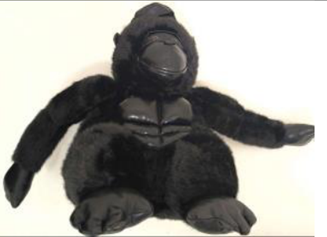
That is why plush accessories deserve much more attention than they usually get. A molded eye, a zipper puller, a decorative button, or a detachable charm may look insignificant, but once it detaches and fits the cylinder, it stops being “trim” and starts being a choking-hazard problem. The gorilla plush case is a perfect example: the left eye detached and fit wholly inside the small parts cylinder, and the product was rejected.
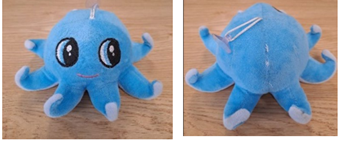
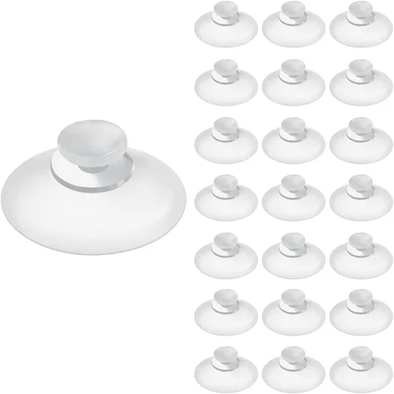
Chemical risk is the other major reason accessories matter so much. CPSC states that toys intended for children 12 and under must not contain more than 0.1% of any regulated phthalate in any accessible component part. The UK plush-octopus case shows how this plays out in real life: the plastic suction cup contained DEHP and DBP at multiple percentage points, far above the 0.1% limit. In other words, the plush body was not what triggered the safety action — the small plastic accessory was.
The first comparison buyers should make: embroidered features vs plastic features
If the product is for babies, toddlers, or a conservative retail safety profile, embroidered or fabric-appliqué features are usually the lowest-risk starting point. The logic is simple: a stitched facial detail does not become a hard detachable component in the same way a plastic eye does. This is also why many plush design guides say the choice between embroidered eyes, appliqué, plastic safety eyes, and molded parts should be driven by age grading, pull strength, and durability requirements.
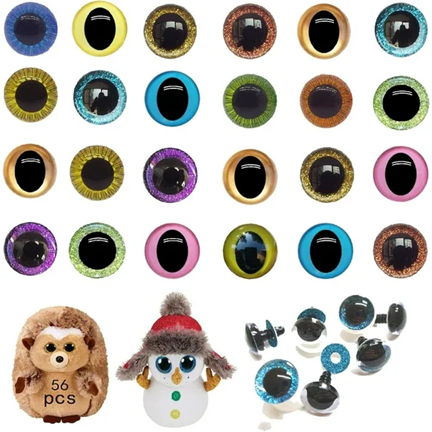
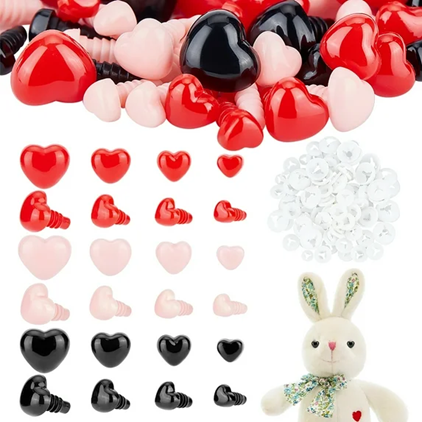
Plastic safety eyes, on the other hand, give stronger depth, shine, and expression consistency. They are often the faster visual route when brands want a more dimensional character face. But the term “safety eyes” can be misleading in a B2B context. If the part detaches, it is still a small part. That is not theoretical; it is exactly what happened in the UK gorilla plush report. For older children’s lines, collector items, or clearly age-graded SKUs, plastic eyes may still be commercially appropriate — but only when the attachment system, testing plan, and target age are aligned from the start.
PVC vs ABS vs TPE/TPU: do not just ask for “plastic parts”
This is where many RFQs become too vague to be useful.
PVC
PVC remains attractive because its performance can be adjusted heavily through additives: it can be made more rigid or more flexible, and properties such as rigidity, weathering, color, and transparency can be tuned during processing. That flexibility is precisely why buyers and factories still look at PVC for soft molded decorative parts. But the same adjustable chemistry is also why the additive package matters so much. CPSC makes clear that children’s products must comply with phthalate rules for accessible components, and the octopus-suction-cup recall is a reminder that poorly controlled plasticized PVC can become a chemical-risk trigger very quickly. PVC is not automatically “banned,” but flexible PVC without controlled formulation and testing is not a material you should approve casually.
ABS
ABS is usually the more straightforward choice when you need a rigid, molded, dimensionally stable accessory. Protolabs describes ABS as popular in toys because of its durability, impact resistance, and ability to be molded into intricate shapes. In plush development, that makes ABS easier to justify for rigid eyes, some noses, clips, housings, or decorative molded parts that need clean geometry and a stable finish. The trade-off is obvious: ABS gives structure, but it also creates a harder accessible component, so retention and age grading matter.
TPE / TPU
TPE and TPU become more interesting when the design calls for something softer, more flexible, or less brittle-feeling than a rigid plastic. Dassault’s technical comparison describes TPE as softer and more flexible to the touch, while TPU is also flexible but generally more rigid and better suited to rugged applications. For plush accessories, that makes them worth comparing when the project requirements call for soft-touch molded parts, flexible tags, soft decorative add-ons, or a more premium tactile feel without defaulting immediately to flexible PVC. They are not a magic compliance shortcut, but they often give product teams another route between “hard ABS” and “soft PVC.”
The second comparison buyers should make: permanent attachment vs removable accessory
The moment an accessory becomes removable, the risk discussion changes.
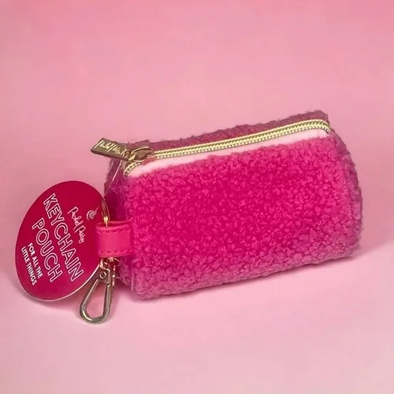
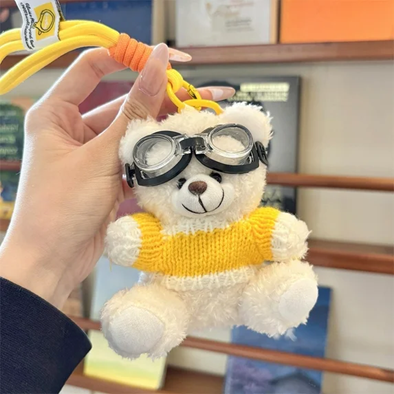
Buttons, zipper pullers, suction cups, clips, rings, decorative props, or keychain attachments can all make a plush toy more sellable or more interactive. But for younger age groups, every one of those parts should be treated as a likely small-parts issue until proven otherwise. Australia’s mandatory standard for toys up to and including 36 months was created specifically to reduce the risk of small parts releasing during play or reasonable wear and tear, and it sets requirements for design, construction, and testing.
In practical factory work, this is why many suppliers push young-child plush toward simpler, flatter, more securely integrated accessory systems. Factory-side guidance on plush clothing and accessories explicitly warns that miniature metal zippers and small buttons are poor choices for 0–3 products and that lower-profile hook-and-loop style closures are often safer and easier to control. That is not a legal rule by itself, but it reflects the same age-grading logic that official small-parts frameworks are built around.
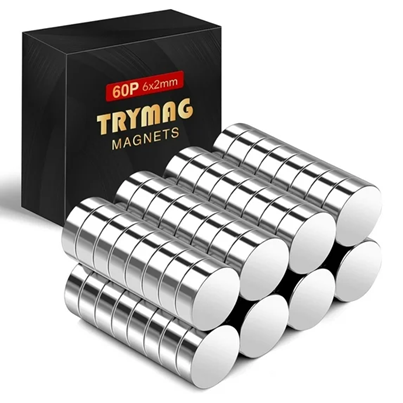
Magnets: great user experience, terrible failure mode if accessible
Magnets deserve their own discussion because they are not just another accessory. CPSC’s magnet rule states that small, powerful magnets can create unreasonable risks if ingested, because they can interact internally through body tissue and lead to acute and long-term injury or death. That is why magnetic accessories on plush toys may work for older collector or branded display products, but they should never be treated casually in products likely to reach young children. If a plush character needs a removable prop, a magnetic concept may look elegant in design review — but the age-grade and containment logic must be much stricter than for a stitched-on scarf or embroidered patch.
Sound modules, squeakers, and batteries: when a plush stops being “just a plush”
Accessory decisions become even more sensitive when they add electronics.
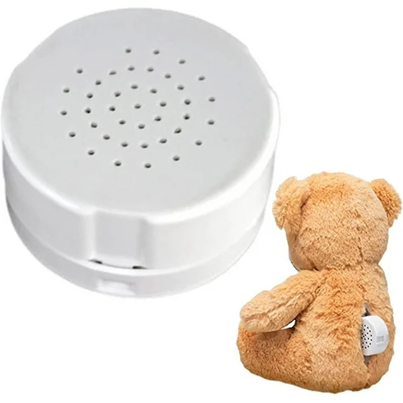
Factory plush-accessory breakdowns commonly separate non-electronic inserts like squeakers and crinkle components from electronic voice boxes, because once you add a battery module, you are no longer making only a textile toy; you are also making a battery-containing product with extra performance, labeling, and safety requirements.
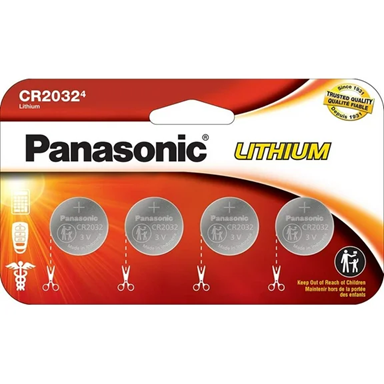
In the US, Reese’s Law and 16 CFR part 1263 require products containing button cell or coin batteries to meet performance and warning requirements. CPSC’s guidance says battery compartments for replaceable button cells must require a tool or at least two independent and simultaneous hand movements to open, must resist access after use-and-abuse testing, and must carry required warnings on the product or packaging where applicable. That means a talking plush or light-up plush should never be approved as a late add-on without revisiting the compliance plan.
Australia takes the same issue seriously. The ACCC states that there are four mandatory standards for button and coin batteries and products containing them, covering product design, testing, and warnings. On top of that, the under-36-month toy standard specifically requires battery-operated toys for that age group to have battery compartments secured so they can only be accessed using a tool. For plush projects, that makes button-battery modules a strategic choice, not just a fun feature.
Japan and Korea add another layer. JETRO notes that from December 2025, toys for children under 3 in Japan become regulated child-specific products requiring compliance with technical and age standards, warning labels, and the national PS mark, while electric toys can also fall under Japan’s electrical-product rules. Korea’s KC framework likewise requires safety testing by a designated body before release or customs clearance for covered children’s products. In both markets, accessories like sound modules or battery components should be reviewed as part of market-entry planning, not after sampling is finished.
The EU angle: why accessory choice is becoming even more visible
In the EU, the direction of travel is clear: toy safety is becoming more digital, more traceable, and more chemical-focused. The Commission says the new Toy Safety Regulation enters into force on 1 January 2026 and applies from 1 August 2030. It strengthens protection against harmful chemicals, including PFAS and bisphenols, and requires a digital product passport for all toys placed on the EU market. For importers and online sellers, that means vague accessory language like “plastic nose” or “soft PVC decoration” is getting harder to justify. Buyers will need cleaner material definitions and cleaner document trails.
What buyers should ask suppliers before approving a small accessory
Before approving any plastic or molded plush accessory, buyers should ask for the exact material identification, not a vague label. “Plastic eye” is not enough. Ask whether it is ABS, PVC, TPE, TPU, silicone, or another resin system; whether it is rigid or plasticized; whether it is accessible after assembly; and how it is retained. That level of definition is what allows the accessory to be matched to the correct chemical test scope and age-grade logic.
They should also ask how the part is attached and what happens after use-and-abuse testing. US small-parts rules explicitly consider not only whole accessories, but also pieces that break off during testing. So the real question is not “Does it look secure in the sample?” but “Does it stay secure after realistic torque, tension, and abuse testing for the intended age band?”
If the accessory is plasticized or soft molded, buyers should request chemical documentation targeted to the destination market, especially where the component is accessible. If it involves batteries, they should request the module specification, battery type, opening method for the compartment, warning plan, and destination-market compliance route. If it is removable or magnetic, they should ask the factory to justify the age grade in writing. The accessory strategy should be part of the tech pack, not an informal side note.
The sourcing rule most teams learn too late
The biggest mistake is thinking the cheapest accessory is the cheapest decision.
In reality, the cheapest accessory can become the most expensive problem if it forces re-testing, delays shipment, increases complaint rates, or weakens consumer trust. A plush toy can have premium fabric and strong embroidery and still lose the sale because the face part looks cheap, the zipper looks unsafe, or the voice module makes the compliance path too complicated. That is why serious product teams treat accessories as part of product architecture, not final decoration.
Conclusion
The right accessory strategy is not “avoid all plastic.”
It is choose the right material, the right attachment method, and the right age-grade logic for the right market. For baby-safe plush, that often means flatter, more integrated, lower-detachment-risk solutions. For mainstream retail plush, it means defining whether you need embroidery, ABS, PVC, or TPE/TPU — and proving that choice with the right testing and documents. For collector or promotional products, it means being honest that magnets, removable props, and battery modules raise both value and risk.
For your independent site, this article should naturally lead readers to these pages next: Custom Plush Accessories, Embroidered vs Molded Facial Features, Plush Toy Safety & Compliance, Interactive Plush Modules, and Custom Plush Manufacturing. That is the traffic flow that turns blog readers into qualified inquiries.