Let’s start with an important clarification:
Not every low-priced plush toy is toxic, and not every inexpensive filling material will automatically fail chemical testing.
But for the US and EU markets, filling systems that are low-grade, poorly defined, inconsistent, or unsupported by proper documentation are far more likely to lead to problems such as:
- odor complaints
- loss of loft
- clumping after washing
- exposed fibers
- structural failure
- compliance concerns
- customer returns and brand damage
That is why plush filling deserves much more attention than it usually gets.
Most buyers still compare plush toys by looking at the outer fabric, hand feel, and price.
But experienced sourcing teams know better. The first real question is:
What exactly is inside the toy?
Because softness, loft, resilience, durability, and even perceived product quality are heavily influenced by the filling material — not just the shell fabric.
1. First, fix the most common misunderstanding: “PP cotton” is not a precise export term
If you are sourcing or marketing plush toys for overseas markets, this is one of the first things you need to clean up.
In the Chinese supply chain, “PP cotton” is widely used as a casual term for plush toy filling. In many cases, suppliers are actually referring to polyester fiberfill / polyfill. However, the term itself is not technically precise enough for international communication.
For US/EU-facing documents, product pages, and specifications, it is much better to state the material clearly, for example:
- 100% polyester fiberfill
- hollow polyester fiber
- hollow conjugated siliconized polyester fiber
- recycled polyester fiberfill
Why does this matter?
Because vague wording creates vague accountability.
And vague accountability creates problems in:
- testing
- compliance review
- customer claims
- sourcing consistency
- product page trust
- sample-to-bulk alignment
You may think you are selling “soft plush filling.”
What your buyer actually wants is material clarity, consistency, and traceability.
2. Why low-grade filling can ruin a plush toy
Many people assume poor filling only means slightly worse hand feel.
That is far too simplistic.
The real issue is that low-grade filling can damage the product on multiple levels at the same time.
2.1 It often fails first in rebound and shape retention
High-quality plush filling is not just fluffy when it arrives.
It should also:
- spring back after compression
- maintain loft over time
- resist clumping
- distribute evenly inside the toy
- remain stable after repeated handling or washing
By contrast, lower-grade filling often contains:
- shorter fibers
- inconsistent fiber structure
- poor crimp recovery
- unstable density
- more impurities or mixed fibers
That is why many plush toys look fine as a sample, but the bulk production feels flatter, heavier, lumpier, or more lifeless after a short period of use.
In other words:
A sample may feel soft on Day 1. A poor-quality filling system reveals itself in use.
2.2 The real risk is rarely just one issue
In plush toy quality control, failure usually does not happen in isolation.
A product can go wrong because of a combination of:
- poorly defined filling material
- unstable material quality
- bad odor control
- weak stitching
- unsafe plastic accessories
- poor documentation
- inconsistent production execution
That is why a toy may run into trouble not just because of the filling itself, but because the entire product system lacks control.
So when we talk about low-grade PP cotton in the industry, we are not simply talking about “cheap stuffing.”
We are often talking about a broader risk pattern:
- unclear material definition
- unstable resilience
- poor odor profile
- weak batch consistency
- incomplete test documentation
- higher complaint and recall exposure
3. Why this matters even more in the US and EU market
For export businesses, the standard is no longer “it looks okay” or “the sample passed.”
The standard is now:
Can you clearly define the material, prove compliance, and support the product with the right documentation?
That shift matters because plush toys are sold into highly regulated markets where product safety, traceability, and online compliance are becoming more important every year.
For buyers and product managers, that means the discussion around filling material is no longer just about softness or cost. It is about:
- compliance readiness
- consistency in mass production
- consumer experience
- online listing credibility
- long-term brand protection
In short, filling material is no longer a hidden cost issue.
It is a visible commercial risk.
4. How to tell premium plush filling from low-grade filling
If you are evaluating plush toy filling for sourcing or product development, here are 6 practical checks worth using.
4.1 Look at it
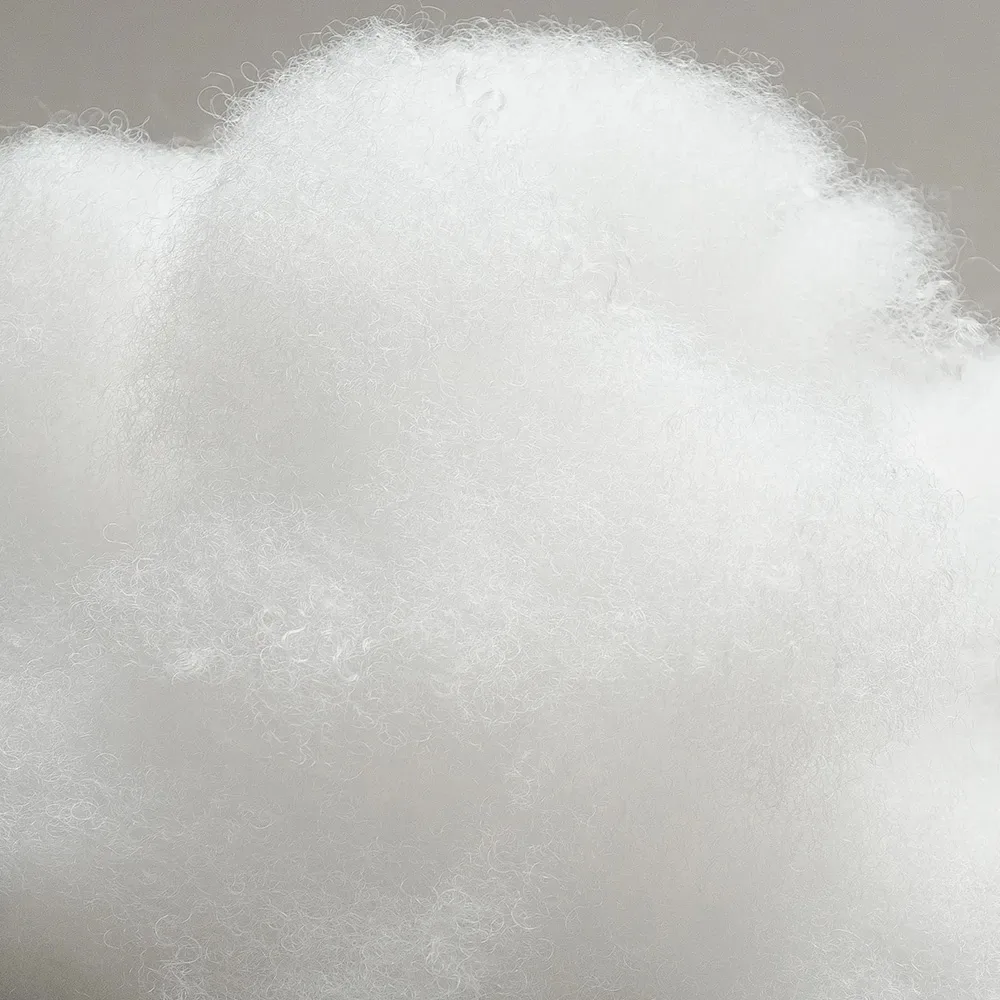
Premium filling should appear:
- clean
- evenly distributed
- fluffy but not chaotic
- relatively uniform in color and fiber texture
- low in visible impurities
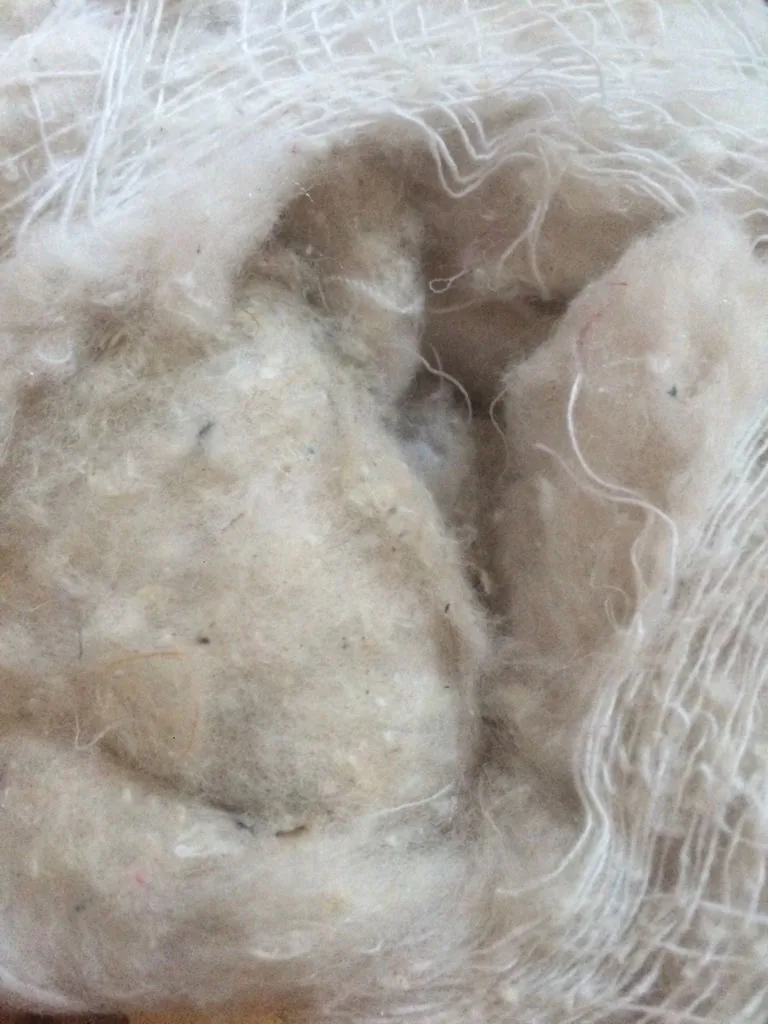
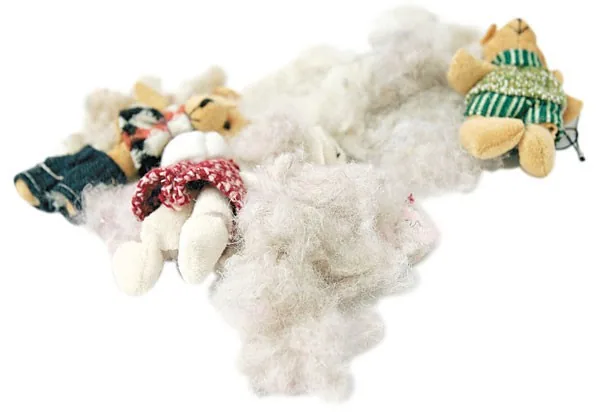
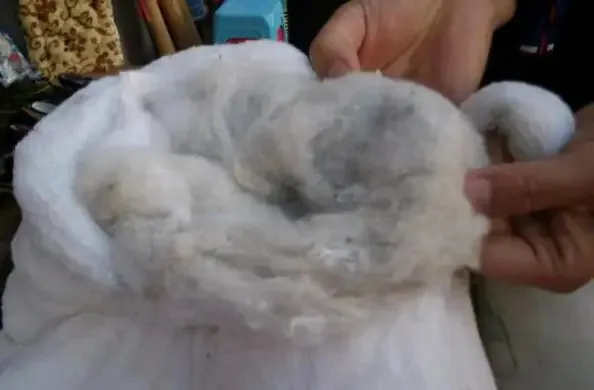
Warning signs include:
- grayish tone
- too many short fibers
- visible black specks or contamination
- uneven fiber clusters
- premature clumping
If the loose filling already looks inconsistent outside the shell, it is unlikely to perform well once stuffed into the toy.
4.2 Touch it
Good filling should feel:
- soft
- smooth
- airy
- resilient
- non-greasy
- non-sticky
- non-harsh
Poor filling may feel:
- dry and scratchy
- overly loose without support
- rough between the fingers
- sticky or strangely heavy
- soft at first, but structurally weak
A premium plush toy filling should not just feel soft.
It should feel soft with body.
4.3 Compress it
This is one of the most useful and most overlooked checks.
Do not just squeeze once and decide.
Compress the sample, let it recover, then compress it again.
What you want to observe is:
- rebound speed
- loft recovery
- whether the filling “dies” after pressure
- whether it remains springy after repeated compression
A filling that looks fluffy but collapses easily will often translate into:
- flattened plush toys
- poor shelf appearance
- lower perceived quality
- more customer complaints over time
4.4 Pull it apart
Take a small amount of filling and gently pull it apart.
Watch for:
- excessive loose fibers
- weak fiber cohesion
- rapid balling or clumping
- shedding
- poor distribution of fiber structure
Better filling tends to retain a more stable, airy fiber network.
Lower-grade filling usually breaks down faster into scattered fibers or lumpy sections.
4.5 Smell it
This is where many sourcing teams underestimate risk.
A strong odor does not automatically prove that a product is “toxic.”
But a strong chemical smell is always a warning sign.
For plush toys, especially for baby lines, gift products, and e-commerce retail, obvious odor problems can quickly turn into:
- poor reviews
- returns
- buyer distrust
- requests for additional testing
- reduced reorder potential
A premium filling material should have a clean and neutral odor profile.
4.6 Ask for documentation
This is where premium and low-grade material really part ways.
Do not settle for generic claims like:
- “good quality”
- “safe material”
- “standard filling”
Ask specific questions:
- Is it polyester fiberfill or another polymer type?
- Virgin or recycled?
- Solid or hollow?
- Siliconized or non-siliconized?
- What is the denier and cut length?
- What is the intended application?
- Can the supplier support the material with the right test documents?
- Are the documents relevant to the target market and actual product use?
If the supplier cannot define the filling properly, that is already a sourcing risk.