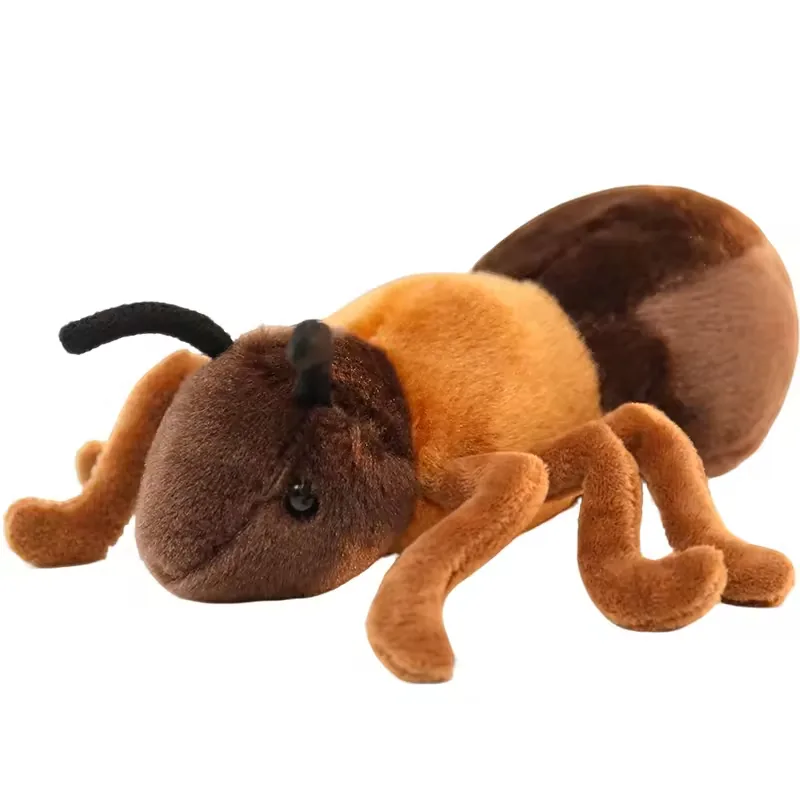
A realistic ant plush toy needs to balance recognition with softness. This version keeps the antennae, body segmentation, and crawling posture clear, but presents them in smooth fabric and rounded forms that work better for educational gifts, science activities, wildlife-themed promotions, and children's plush displays.
1. The segmented body keeps the ant identity clear at first glance
The head, middle body section, and rounded abdomen are separated clearly enough that the plush reads instantly as an ant instead of a generic bug. Buyers who already liked the strong silhouette in the realistic scorpion plush doll collection can use the same logic here, then adapt size, logo tags, or packaging through the custom plush toys page.
| Visible feature | Buyer value | Good use case |
|---|---|---|
| Three-part ant body | Keeps the silhouette recognizable in photos, on shelves, and inside educational kits. | Science-center gift shops and insect-learning displays. |
| Soft legs and curved antennae | Adds movement and insect character without making the plush feel harsh. | Children's gifts, classroom props, and themed merch. |
| Warm brown and amber color blocking | Gives the toy a natural look while staying clean and easy to merchandise. | Nature programs, museum retail, and seasonal educational assortments. |
2. Soft fabric and rounded legs make the toy suitable for educational gifting
Educational insect products work better when they feel approachable. The soft velour finish, small glossy eyes, rounded legs, and simplified antennae keep the biological reference visible without making the toy feel sharp or unsettling. That makes the plush easier to place in classroom corners, museum shops, learning gift packs, and children's nature programs.
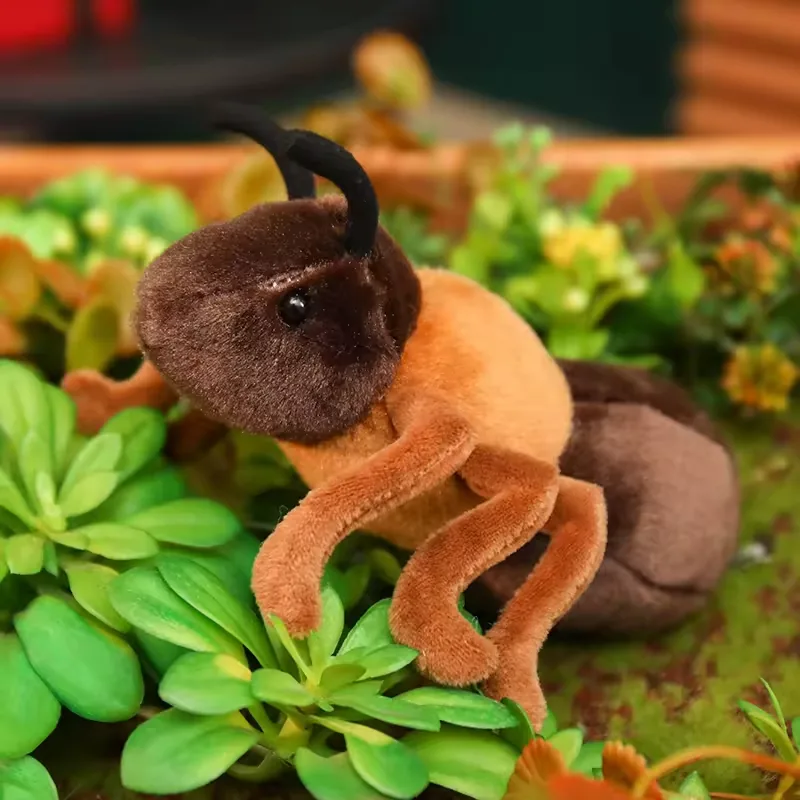
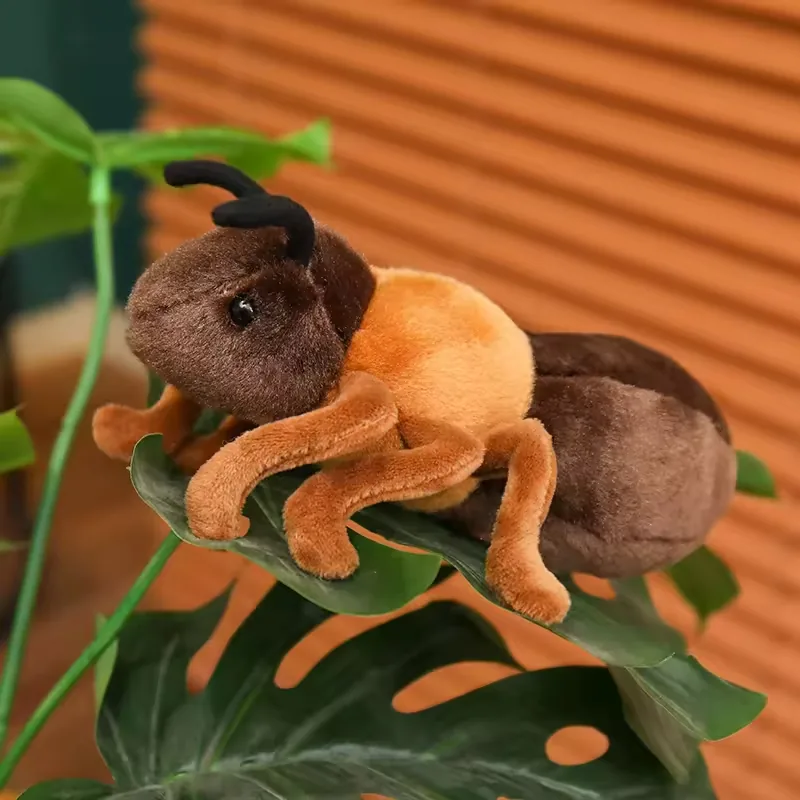
3. Lifestyle scenes help the plush fit museum retail, classroom kits, and nature themes
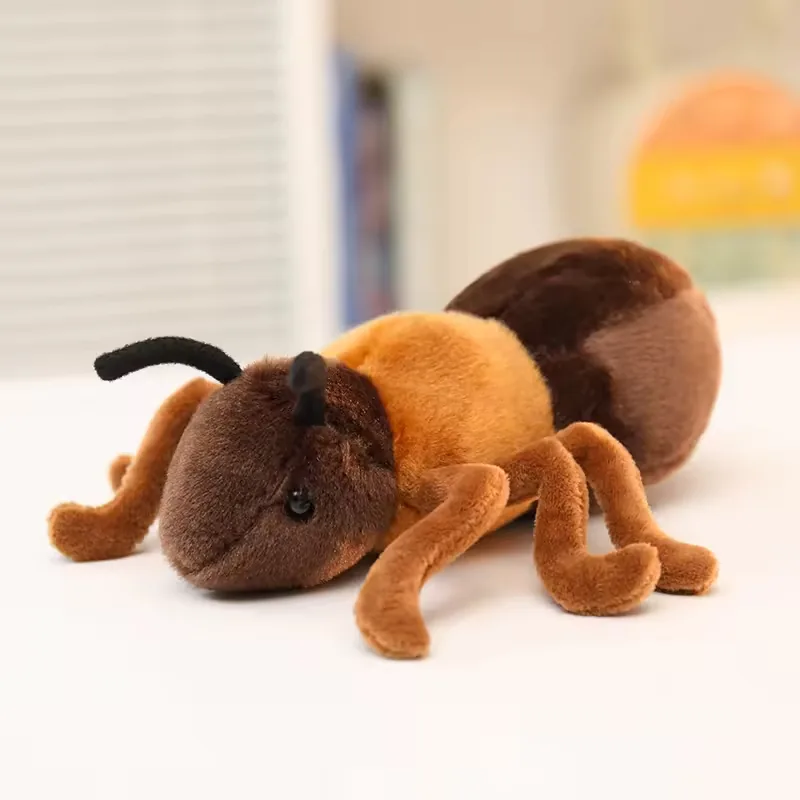
Because the product looks good on tabletops, leaves, and plant-led props, it can move beyond a single novelty gift and work inside broader nature collections. Teams building insect or small-creature assortments can compare that route with the custom big eyes plush mosquito toy, where character clarity also drives merchandising.
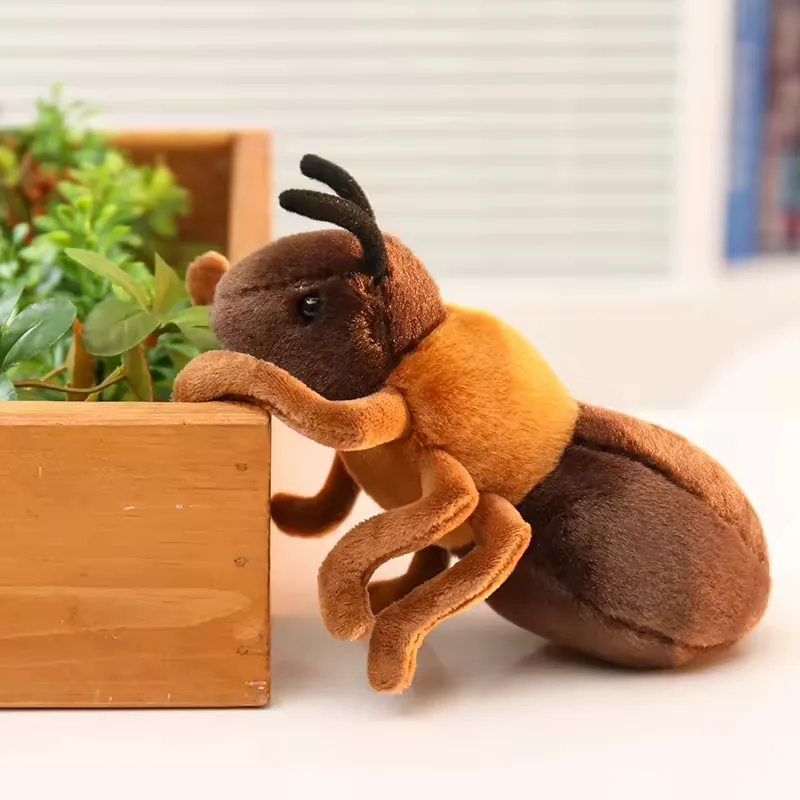
A display-ready ant plush for nature and education programs
This side-angle lifestyle image helps buyers judge shelf presence, antenna shape, and how the plush works in insect-themed displays.
4. Sampling should protect antenna curve, leg balance, and body fullness
For production, the biggest risk is losing the ant read after filling and packing. If the antennae flatten, the legs twist unevenly, or the abdomen loses volume, the toy stops feeling premium and educational at the same time.
- Check antenna stiffness and stitch placement so the head still reads clearly after packing.
- Review leg symmetry from front and side angles to keep the crawling pose balanced.
- Test filling density in the abdomen so the rear body keeps a full rounded shape.
- Confirm color blocking alignment between head, thorax, and abdomen before bulk approval.
5. This ant plush format works best for educational gifts, museum shops, and insect-themed product lines
This realistic ant plush toy is a strong fit for science museums, school gift programs, children's nature corners, insect-learning sets, and brands that want a softer wildlife SKU. The fastest next step is to confirm target size, packaging format, and quantity on the quote page.
A good ant plush keeps the insect unmistakable, but soft enough that children want to pick it up.