Plush size is one of the most underestimated decisions in product development.
Many teams still treat it as a late-stage adjustment: “Can we make it a bit smaller to save cost?” or “Can we scale this up for more impact?” But plush size is not just a visual choice. It changes the product’s sales channel, perceived value, freight profile, engineering difficulty, and safety/compliance path. Manufacturer guides aimed at real production buyers consistently connect size to cost, packaging, logistics, design readability, and age grading, not just to centimeters or inches.
1) First, there is no single universal size standard — but there is a practical export ladder
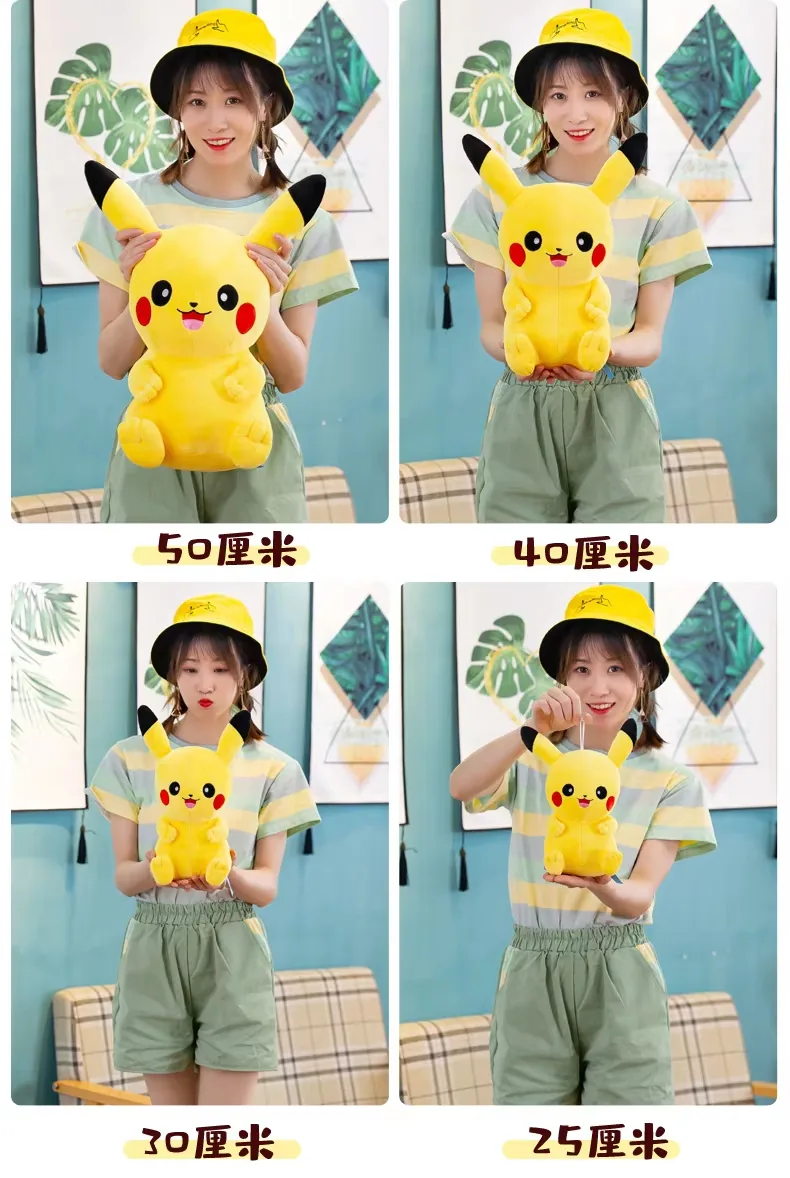
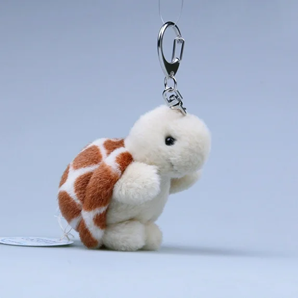
Factories do not all use exactly the same names, but their working ranges are surprisingly similar. A practical export-oriented ladder usually looks like this: Mini/Keychain around 6–12 cm, Small around 11–20 cm, Medium around 21–35 cm, Large around 36–55/60 cm, and Jumbo above that. Good suppliers also specify whether they are quoting standing height, sitting height, or overall drop for clip-on items, because “10 cm” can mean very different things depending on posture and accessories.
That measurement discipline matters commercially. For mini plush and clip-ons, body height and total drop with hardware should be separated. For seated plush, standing height and sitting height should both be published. If you do not standardize this in your tech pack and product page, you create one of the fastest routes to buyer confusion and size complaints.
2) Which size fits which sales scenario?
Small sizes: best for entry price points, collectibles, counters, and promotions
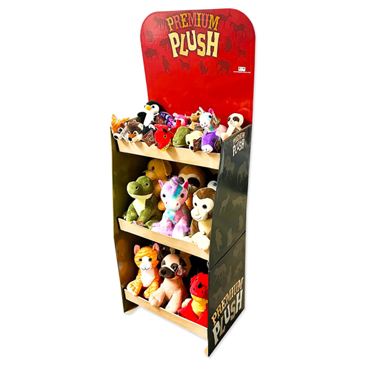
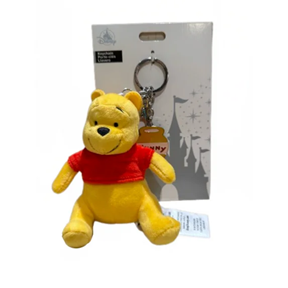
Mini and small plush are strong when the product needs to be portable, giftable, or easy to mass-display. Factory guides consistently place these sizes in channels such as keychains, bag charms, blind boxes, capsule/gashapon formats, event giveaways, counter displays, and low-price gifting. Plush keychain manufacturer guides also position them as effective gift-with-purchase, trade-show giveaway, and brand loyalty items, because they are easy to distribute and relatively efficient to ship.
That makes small sizes especially good when your goal is high unit count, impulse purchase, add-on sales, or market testing for a new character. They are also useful when you want a lower entry price without committing to a full-size hero SKU. But small sizes only work well when the design is simplified enough to survive scaling down.
Medium sizes: the commercial sweet spot for retail and e-commerce
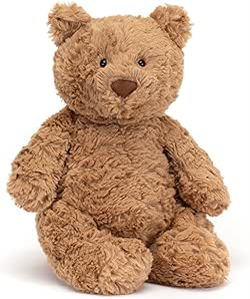
If you only launch one core size, medium is usually the safest commercial bet. Multiple factory guides place roughly 21–35 cm / 8.5–14 in as the zone that works best for core retail, e-commerce hero images, bedtime use, and mainstream shelf presentation. Kinwin explicitly describes medium as the most flexible size and notes that it is easiest to sew and stuff, while also fitting well on shelves and beds. It also points out that medium sizes sell well on channels like Amazon and Shopify.
This is why medium often becomes the “base size” for global plush programs. It is large enough to feel like a real plush toy, small enough to ship and display efficiently, and forgiving enough for factories to keep quality stable across volume. In many plush lines, medium is not the most exciting size — it is the size that quietly makes the business model work.
Large and jumbo sizes: best for premium gifting, décor, display, and hero SKUs
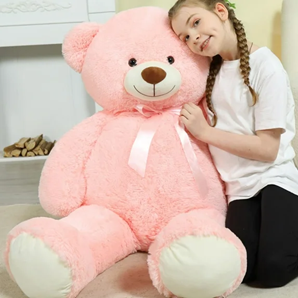
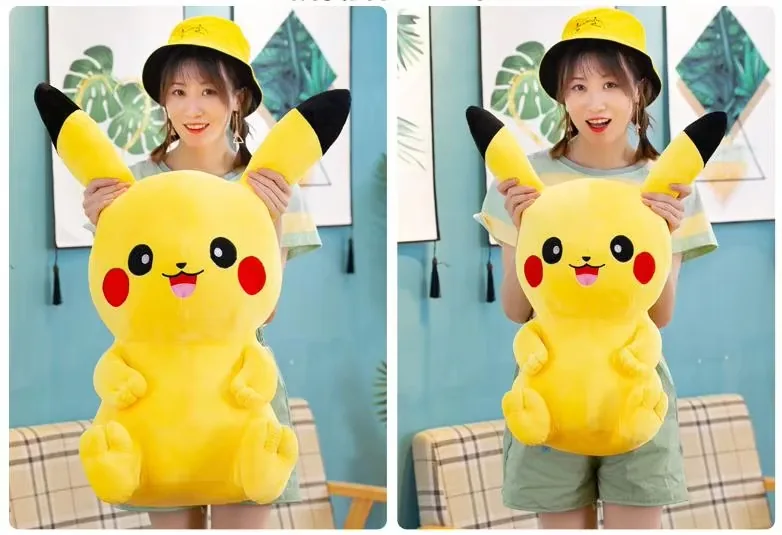
Large and jumbo plush create emotional impact fast. Manufacturer guides commonly place them in premium gifts, room décor, reading companions, floor play, event display, window display, theme park prize assortments, and hero SKUs. They are also more likely to be used as premium seasonal upsells rather than as the everyday core assortment.
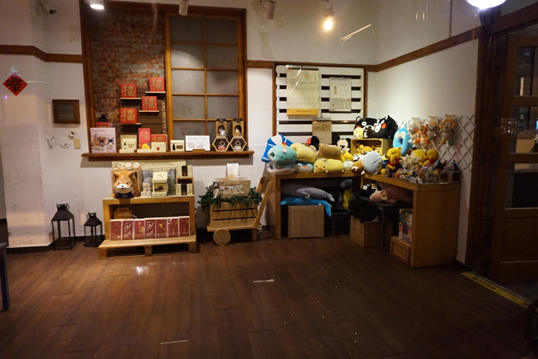
But scale comes with trade-offs. Shelves and hooks have limited depth and height, so large pieces are harder to mass-display. Some factories explicitly note that large and jumbo items often need special racks, floor placement, or end-cap strategies instead of dense shelf merchandising. In e-commerce, they also need better scale photography to prevent “smaller/larger than expected” complaints.
3) As size gets bigger, fabric requirements change
This is where many non-technical buyers oversimplify the project. Scaling a plush from 10 cm to 100 cm is not linear. A fabric that looks great on a medium plush can make a mini plush unreadable or a jumbo plush structurally weak. One sizing guide puts it clearly: when size changes, you must recalibrate pile length, GSM, seam allowances, stitch length, and stuffing density rather than simply scaling the pattern.
For small plush, the safest route is usually short pile. Factory guidance recommends 2–3 mm short pile or smooth minky when facial clarity matters, because long pile can swallow details and make embroidery look fuzzy. Kinwin also notes that thick fabric on small plush can make corners bulky and hard to turn. In practice, that means small plush need cleaner, flatter, more controlled surfaces if you want the face to read well.
For medium plush, you have the most freedom. Around 3–6 mm pile often gives a good balance between softness, readability, and manufacturability. This is one reason medium sizes are so forgiving: more fabrics work well here without forcing a redesign of the face or silhouette.
For large and jumbo plush, longer pile and heavier fabrics become more viable — but only if the sewing plan changes too. Factory guidance says 6–12 mm pile or faux fur can work well in larger plush, provided seam allowances are trimmed and the surface is groomed after sewing. It also notes that heavier GSM helps reduce stuffing show-through. In other words, bigger plush can support richer texture, but only when the material and sewing method are upgraded together.
4) Filling does not scale linearly either
Small plush often fail because buyers assume less fill simply means lower cost. The real challenge is not fill quantity — it is fill behavior in tight spaces.
For minis and smalls, factory guidance recommends soft-to-medium fill and even shorter fiberfill for tight corners, so limbs do not become hard or “wooden.” Kinwin also notes that very small plush are difficult to stuff evenly into tiny limbs and corners. This is why a small plush can feel awkward faster than a medium one if the filling plan is not adjusted.
For medium plush, medium fill is usually the safest choice for shape retention. Some factory guides recommend a two-stage approach — filling limbs first, then the torso — to keep seams cleaner and the silhouette more controlled.
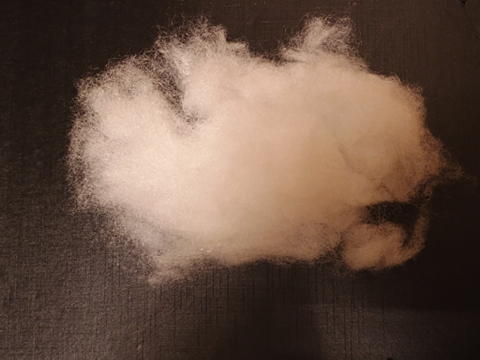
For large and jumbo plush, a simple “fill it more” strategy usually backfires. Better practice is zoned density: firmer torso, softer face, and more deliberate mass targets in the tech pack. Kinwin also notes that very big plush may need stronger seams and sometimes internal chambers to keep stuffing from shifting too much. That means once plush gets big enough, filling becomes a structural decision, not just a softness decision.
5) Sewing requirements change even faster than material use
This is the part many buyers miss: small plush is not “easy plush.”
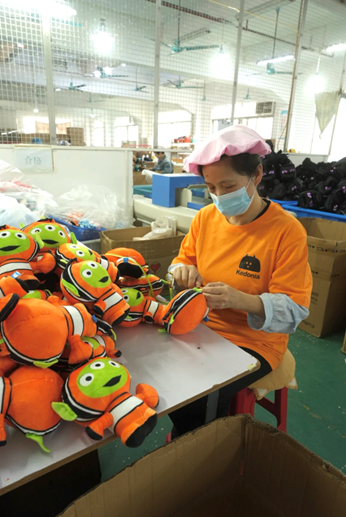
For very small plush, seam allowances are tiny, sewing tolerance is low, and details such as eyes and mouth often have to be simplified, re-drawn, or printed. Kinwin explicitly says very small plush have tiny seam allowances that are harder to control and a very low error tolerance. Szoneier adds that seam allowances should not be scaled 1:1 and gives a useful factory rule of thumb: small plush may use around 5–6 mm, medium 6–8 mm, and large/jumbo 8–12 mm, depending on fabric bulk.
Small plush also create a readability problem. To keep the character recognizable, factories often exaggerate the head and simplify the face. Kinwin notes that mini plush frequently use bigger heads and simpler features so the character still reads correctly at small size. That is not just a style choice — it is a manufacturability choice.
At the other extreme, large plush create handling and reinforcement problems. Big pattern pieces need more space, fabric stretch has more visible effect, and factories may need stronger seams or even internal support structures. Large parts are also slower to handle and close. So the sewing burden does not disappear as size increases; it changes shape.
6) Why are some small plush toys more expensive than medium ones?
This is the part that gets clicks because it contradicts buyer intuition.
Reason 1: labor does not shrink in proportion to size
A small plush may use less fabric, but it can require more precision per centimeter. Multiple factory sources say that small plush become more challenging when the design has many parts or compressed detail. One manufacturer notes that small designs with more than three structural parts are harder to sew and stitch, reducing production efficiency and raising labor cost. Another notes plainly that smaller sizes increase sewing complexity.
Reason 2: complexity gets compressed into a tiny space
A dragon keychain with wings, horns, feet, tail, embroidery, and metal hardware is still a dragon — even if it is only 8 or 10 cm tall. FunEnjoy’s keychain guide explains that each extra pattern piece, embroidery pass, and hardware choice adds labor, machine time, and assembly cost. Small products do not escape complexity; they often compress it.
Reason 3: fixed setup costs do not care how small the plush is
This is one of the most important commercial truths for B2B buyers. Factory cost guides explain that pattern engineering, machine setup, embroidery programming, material sourcing, sample revisions, needle detection, and testing setup are fixed or semi-fixed tasks. FactoryPlush explicitly says the labor to set up the line, program embroidery machines, and run needle-detection procedures is identical regardless of whether the batch is small or large; Leeline similarly frames plush pricing as a mix of variable production cost and fixed setup/compliance cost amortized over volume.
Reason 4: small products can carry extra accessory and labeling burden
Mini and keychain plush often add metal rings, clips, charms, or other hardware. FunEnjoy points out that the hardware itself affects cost, usability, and perceived value. On top of that, U.S. tracking-label rules still require identifying information to be ascertainable on the product and packaging, even though CPSC recognizes that marking very small products may only be practicable “to the extent practicable.” In practice, that means mini plush and clip-ons often need a more carefully planned packaging and labeling solution rather than a simpler one. That is an inference from CPSC’s labeling guidance and the way mini SKUs are commonly merchandised.
So yes — a simple small plush can be cheap. But a detailed small plush, especially in low volume or with hardware, can easily cost more per unit than a cleaner medium plush.
7) Logistics is where large sizes start to punish margin
For small plush, logistics are often forgiving. For large plush, logistics can erase margin very quickly.
FedEx states that dimensional weight is calculated from length × width × height ÷ 139 for U.S., Puerto Rico, and international shipments. UPS similarly notes that billable weight may be based on dimensional weight when a package is large relative to its actual weight, and its standard package limits include 150 lb maximum weight, 108 in maximum length, and 165 in length + girth combined. In other words, large plush are the classic case of “shipping air.”
That is why large and jumbo plush often move into bigger boxes, single-unit retail cartons, or vacuum-compressed export packing. Kinwin explicitly notes that large/jumbo plush need bigger boxes or vacuum packing and that shipping cost per piece grows much faster than height alone suggests. Factory cost guides make the same point from a landed-cost perspective: plush is low-weight but high-volume, so compression and carton optimization matter disproportionately.
This is also why medium remains such a strong global base size. It gives enough perceived value to sell well without triggering the same volumetric penalties as oversized plush.
8) Size also changes the compliance conversation
Once you sell into the U.S., EU, Australia, Japan, or Korea, size selection stops being just a merchandising choice.
In the United States, toys intended primarily for children 12 and under must be third-party tested and certified in a Children’s Product Certificate. CPSC’s ASTM F963 chart specifically lists stuffing materials and stuffed & bean bag-type toys among the sections that may require third-party testing. CPSC also bans small parts for products intended for children under 3 and defines a small part as anything that fits entirely inside the small parts cylinder.
In the EU, toys must meet the Toy Safety Directive’s requirements covering general, physical/mechanical, flammability, chemical, electrical, hygiene, and radioactivity risks. The new Toy Safety Regulation (EU) 2025/2509 enters into force on 1 January 2026 and starts applying on 1 August 2030, and all toys will require a digital product passport. That matters for plush sizing because mini SKUs, large display SKUs, and under-3 SKUs all create different documentation and warning-layout pressures.
In Australia, the under-36-month mandatory standard explicitly includes stuffed, plush and flocked animals and figures. It was designed to reduce the risk of small parts releasing during play, uses a small-parts cylinder, and requires battery compartments on battery-operated toys for this age group to be secured so they can be accessed only with a tool.
In Japan, METI’s revised framework designates toys for infants under 36 months as specified products for children, with enforcement beginning 25 December 2025. The new rules require compliance with technical standards and precautionary labeling, including intended age range, for these infant toys.
In Korea, KTR explains that the KC children’s-product safety confirmation system requires the manufacturer or importer to obtain a safety test from a designated certification agency prior to release or customs clearance for covered children’s products.
The commercial takeaway is simple: small sizes increase choking and labeling sensitivity, while large sizes increase seam, stuffing, transport, and sometimes battery/hardware management pressure. Size is part of compliance planning, not a separate decision.
9) So what size strategy should a B2B buyer actually use?
For most export programs, the smartest size plan is not “offer everything.”
A more practical ladder is:
- Mini / Small = entry, collectible, giveaway, add-on
- Medium = core retail and e-commerce winner
- Large / Jumbo = premium, seasonal, hero, display
That logic mirrors how factories already see sell-through and pricing ladders: mini at entry price, medium as core, and large as premium or seasonal upsell. Kinwin also suggests testing 2–3 sizes in the first run, tracking sell-through, and then doubling down on the winning size in later production.
If you are developing for global markets, the safest rule is this:
Do not ask “What size do we like?”
Ask “What size fits the channel, the margin, the age grade, and the production reality?”
That is the question that protects both your product page and your margin.
Conclusion
Small, medium, and large plush are not just bigger or smaller versions of the same SKU.
They behave like different commercial products.
Small sizes win in collectibles, giveaways, counters, keychains, and low-barrier entry pricing. Medium sizes are usually the most efficient all-round retail and e-commerce format. Large and jumbo sizes win attention, emotional value, and display impact — but they also amplify fabric, fill, seam, packaging, and freight complexity. And yes, some small plush really do cost more than medium ones when the design is dense, the hardware is real, and the fixed setup has nowhere to hide.
For your independent site, this topic should naturally drive traffic to these pages next: plush keychains, core retail plush (20–35 cm), jumbo display plush, plush fabric guide, stuffing materials guide, and toy safety & compliance support. That is the cleanest path from educational traffic to RFQs