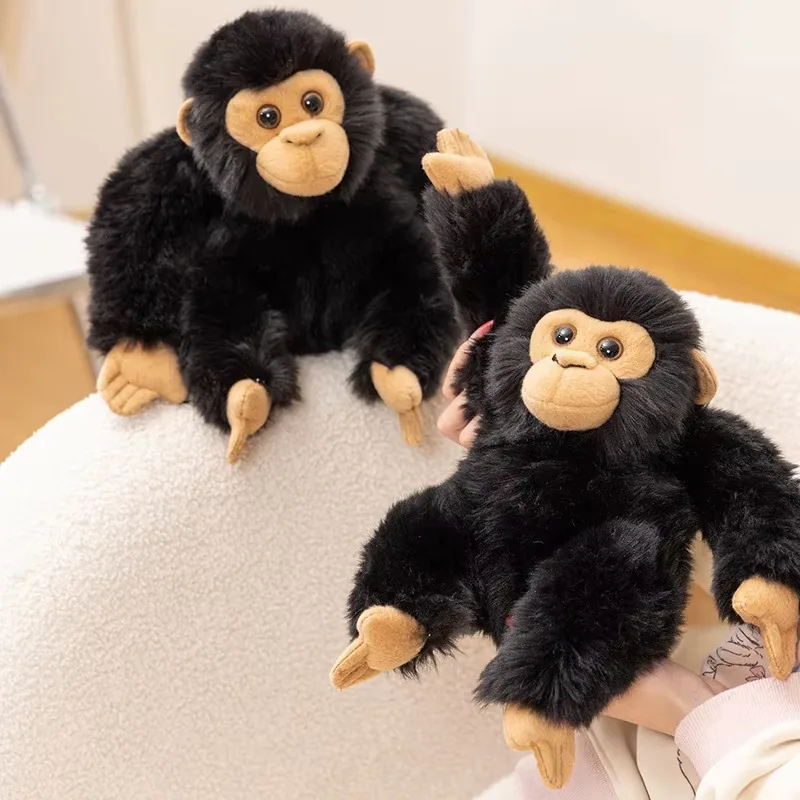
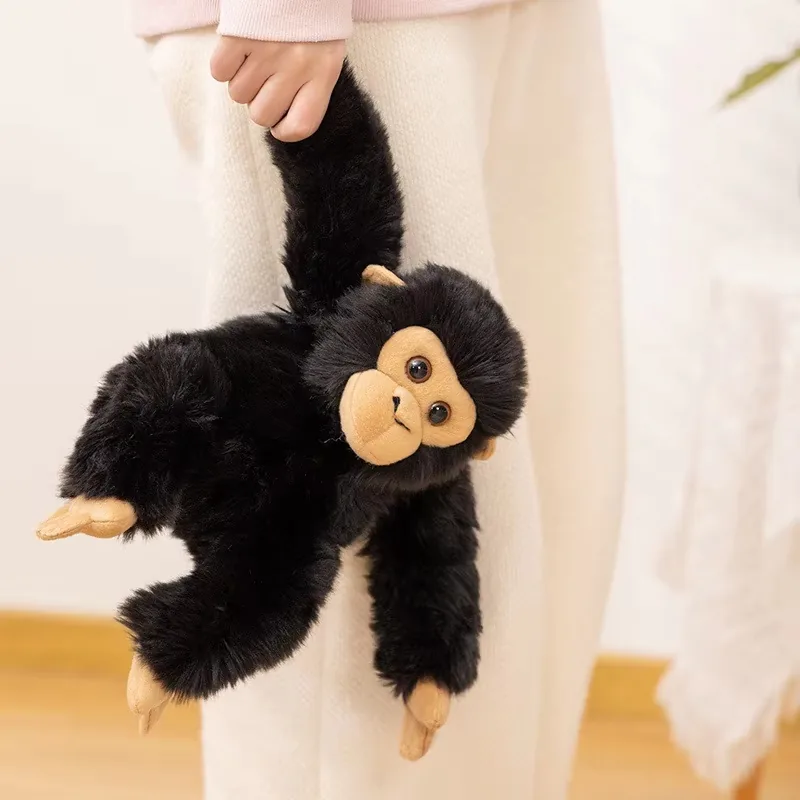
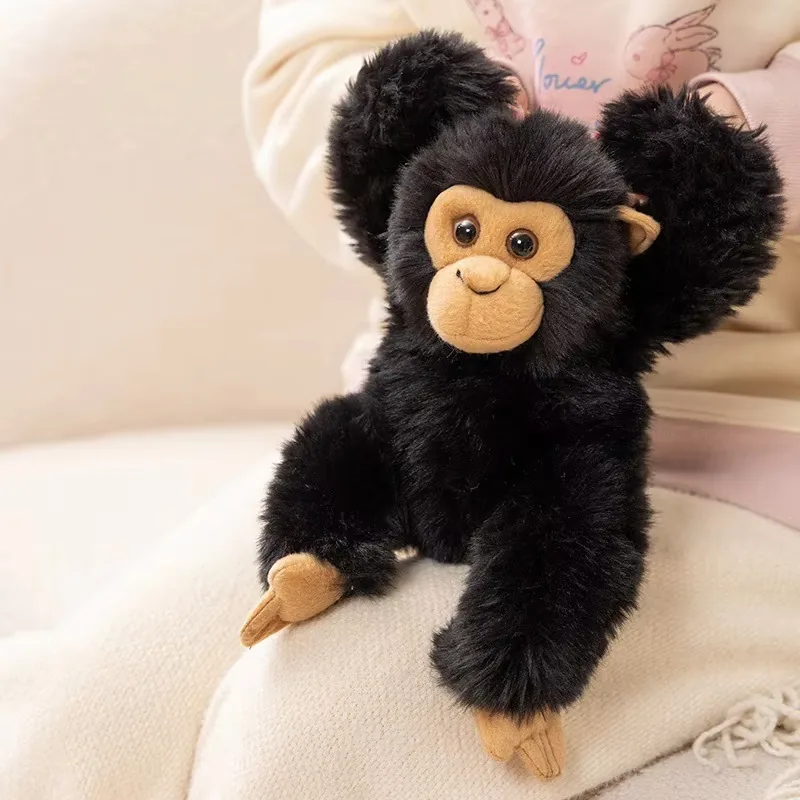
Wildlife plush succeeds when the shape is recognizable, the fur reads soft enough for gifting, and the product still feels display-friendly. This black chimpanzee series hits that balance well. The pair shot suggests a simple two-size story, while the held and seated views explain how the longer arms and softer body make the plush more interactive than a rigid animal figure.
1. The long-arm body shape makes the product feel more like a chimpanzee than a generic monkey plush
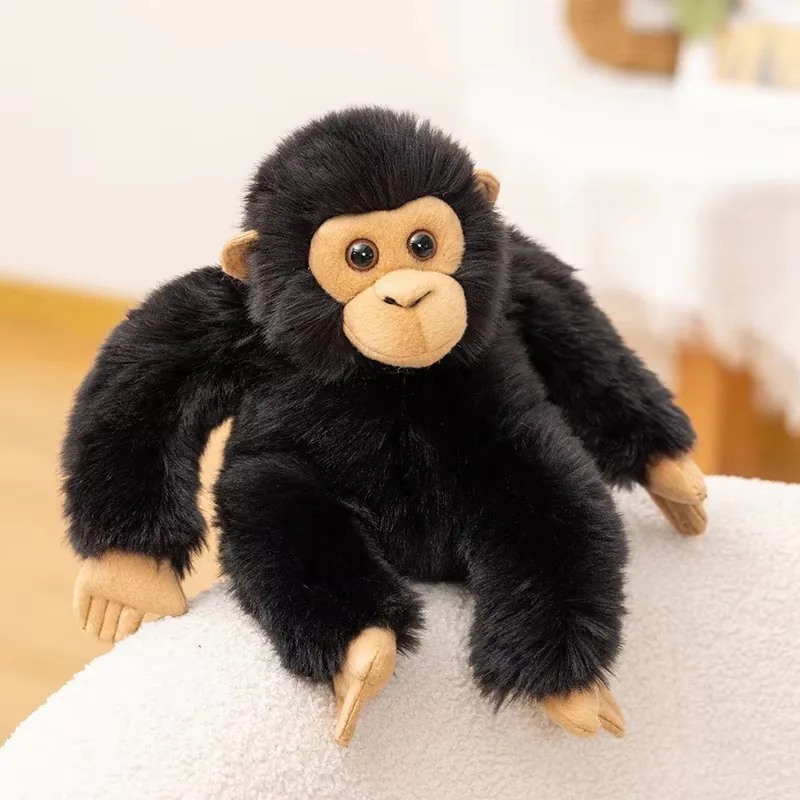
The biggest commercial advantage here is the silhouette. The longer front arms, narrower seated torso, and slightly extended leg posture make the plush feel more species-specific than a round cartoon monkey. That helps the toy work for zoo gift shops, wildlife museum retail, and animal-themed educational assortments where buyers want something recognizably tied to a real animal. If your team is comparing another animal plush that relies more on facial simplicity than body posture, the Psyduck plush collection is a useful contrast.
2. The held and seated views make the product easier to pitch for gifts and educational retail
Model interaction matters for animal plush because it shows whether the product feels huggable or merely decorative. In this set, the held-by-arm photo and the seated-with-model photo show that the plush is light and flexible enough for casual carrying while still staying recognizable in a seated pose. That broadens the use case from shelf display into children's gifts, souvenir shops, and animal-themed lifestyle programs.
3. The cutout shot makes sampling and listing work easier
The cutout image is especially useful for e-commerce and sample review because it strips away the lifestyle setting and leaves the core body proportion visible. Buyers can judge face symmetry, arm length, leg angle, and fur coverage more quickly when the plush sits against a clean background. That saves time when the team needs to decide whether to keep the design realistic, soften the face, or adjust the seated balance before bulk.
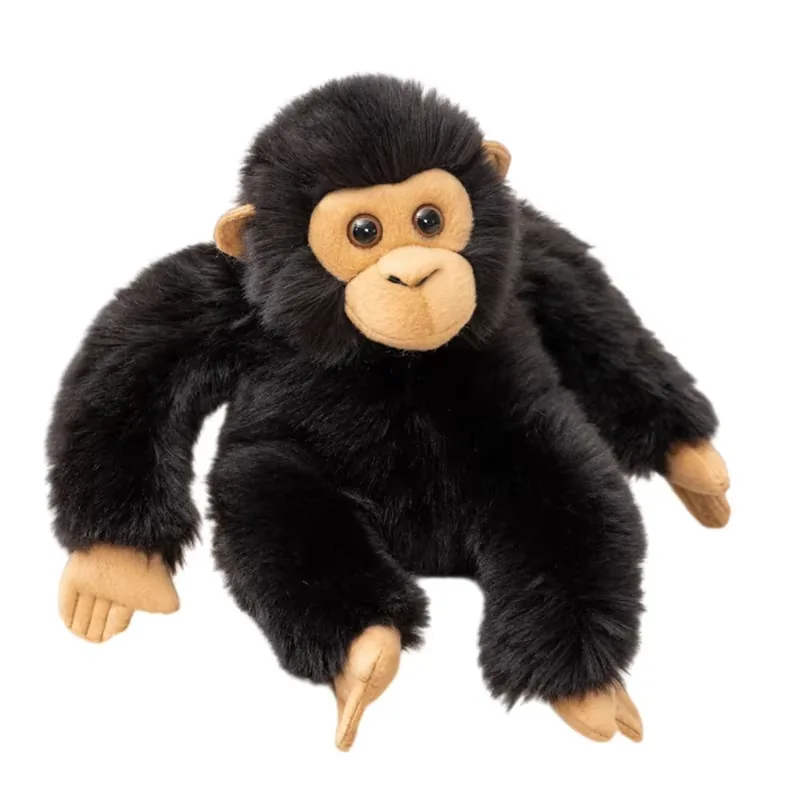
Why the clean cutout matters
A plain-background shot helps buyers judge proportion, arm drop, face placement, and listing suitability without visual distraction.
- Protect the tan face panel shape early, because it defines the whole expression of the chimpanzee.
- Keep the arm length and softness balanced so the plush can drape naturally without looking limp.
- Use one clean cutout image alongside one lifestyle image when building the sales sheet or listing page.
This chimpanzee plush works best when it stays realistic enough to feel animal-led, but soft enough to remain giftable for zoo shops, wildlife programs, and family retail.